English
 中文简体
中文简体 русский
 Español
 Deutsch
You can learn the recent information of Shijing.


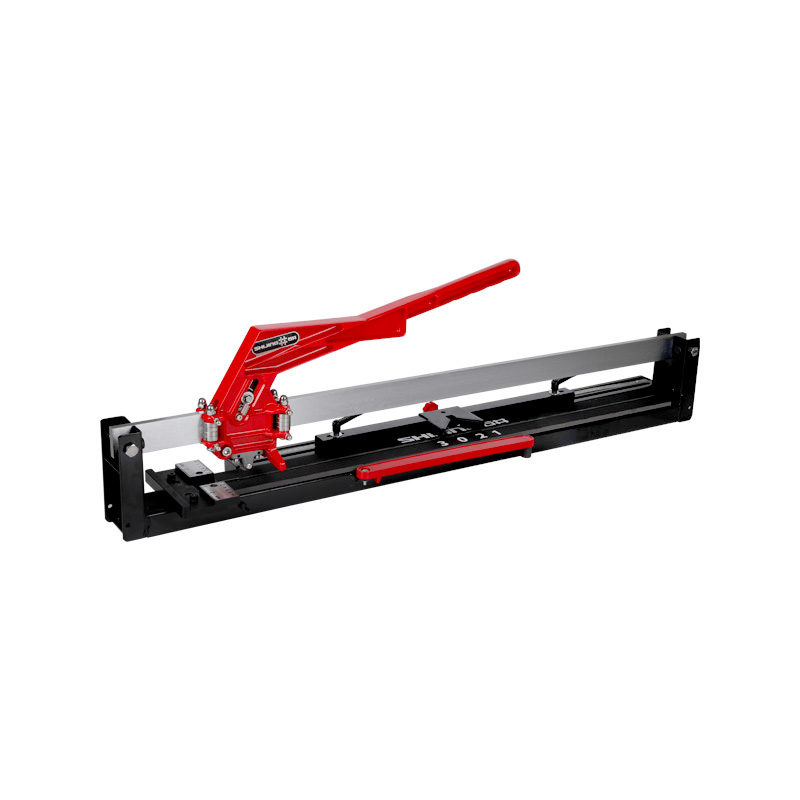

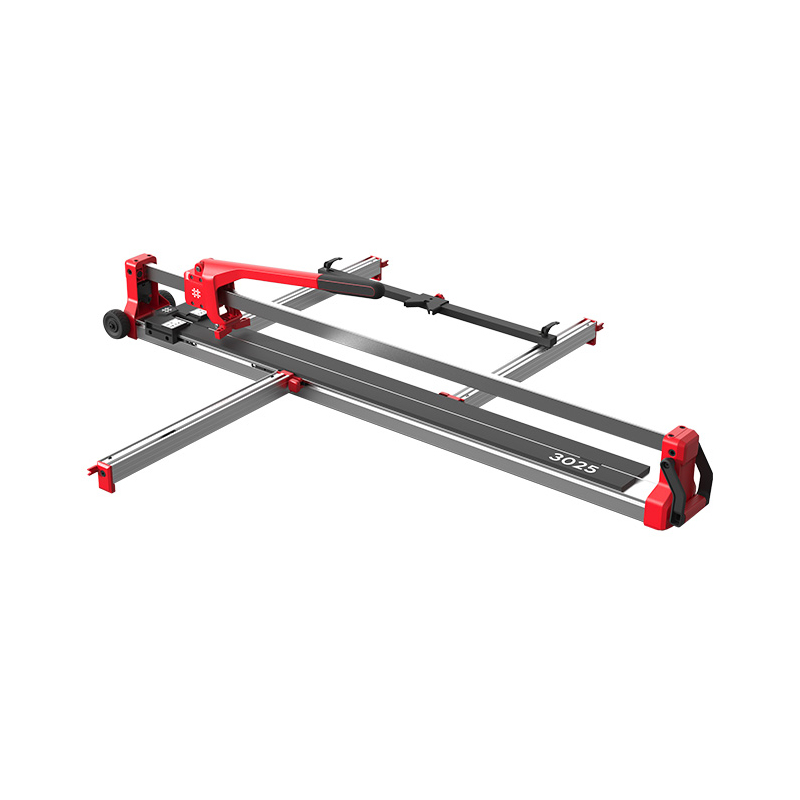
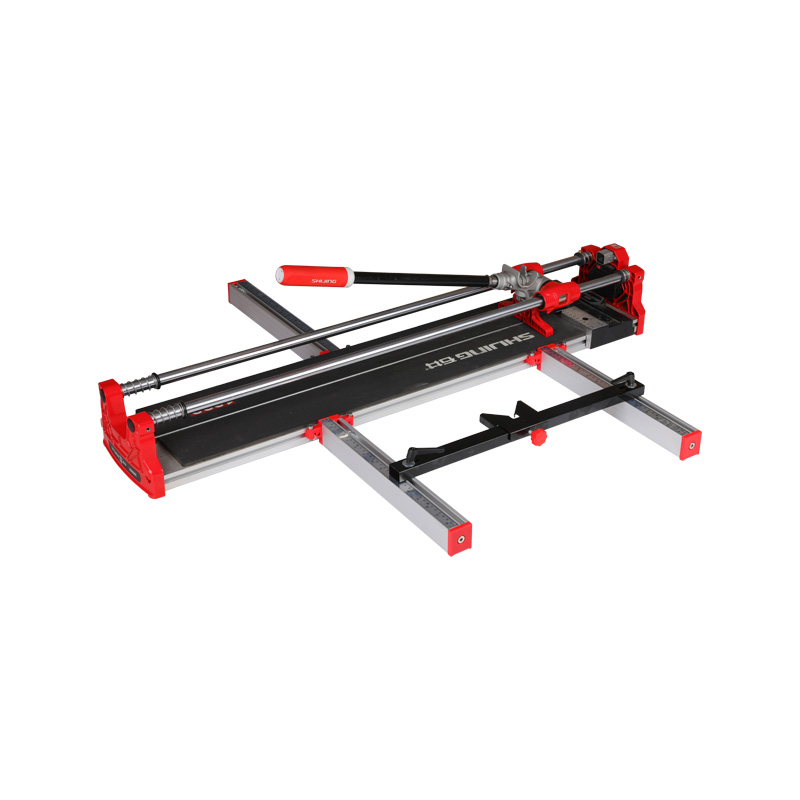
A tile can appear to follow a clean scoring line and still crack somewhere else when the pressure is applied. That can be frustrating, especially when the same cutting setup seems to work normally on another tile. The reason is rarely tied to one part alone. The support underneath the tile, its position on the base, the movement of the cutting head, the condition of the scoring wheel, and the tile itself can all affect how the break develops.
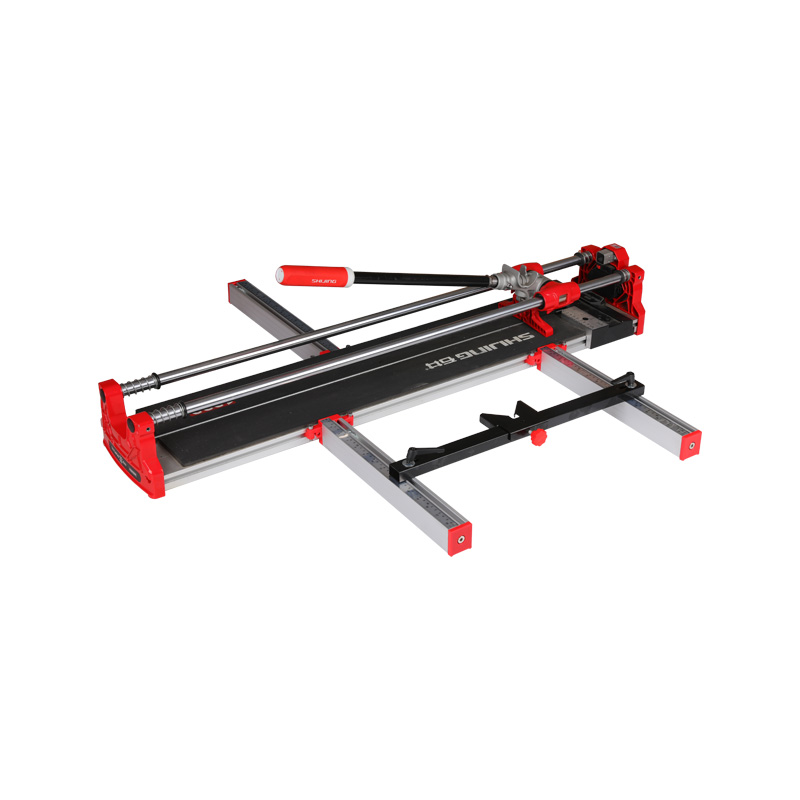
An Aluminium Base Plate Manual Tile Cutter provides a working surface where the tile is positioned and scored by hand. Because the process depends on controlled movement rather than powered cutting, small changes in contact, alignment, or pressure can become noticeable in the finished edge. Looking at these details separately makes it easier to see why one tile may break along the intended line while another develops a crack away from it.
Why Does An Aluminium Base Plate Affect Tile Cutter Stability
The base plate has a simple but important role. It gives the tile somewhere to rest while the scoring wheel travels across its surface. If the tile is properly supported, the scoring movement can remain relatively steady. If the support changes during the process, the result can change as well.
A flat working surface helps keep the tile in a consistent position. A surface that has collected pieces of tile, dust, or other residue can create small gaps beneath the tile. These gaps may not be obvious when the tile is placed down, but they can become relevant when pressure is applied.
The condition of the base also matters. A plate that has become uneven through use may not support the tile in the same way across its entire length. The operator may then feel a change in resistance while moving the cutting head or pressing the handle.
This does not mean that every crack comes from the base. Tile structure and scoring technique remain important. The base is simply one part of the physical arrangement that keeps the tile in position during cutting.
| Base condition | Possible effect during cutting |
|---|---|
| Clean and even surface | Tile can remain steadily supported |
| Loose debris on the surface | Tile may sit unevenly |
| Worn contact areas | Support can vary across the cutting path |
| Damaged or uneven areas | Tile movement may become harder to control |
For this reason, checking the base before cutting is a practical step. It can also prevent a simple surface problem from being mistaken for a fault elsewhere.
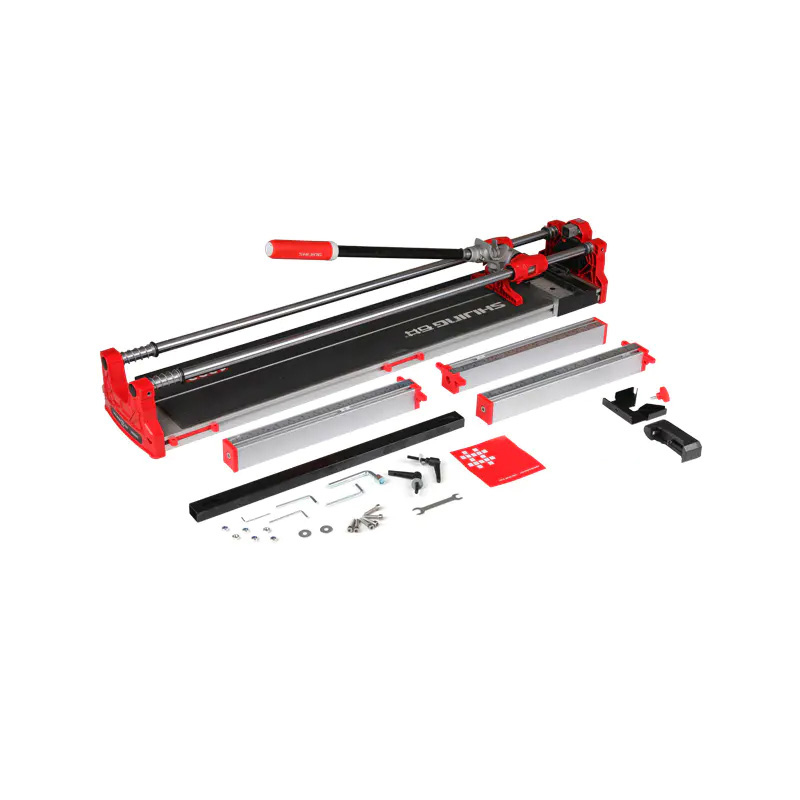
Why Does The Tile Move On An Aluminium Base Plate During Cutting
A tile needs to remain in the intended position while the scoring wheel passes over it. Movement can happen for several ordinary reasons. The tile may not have been placed squarely, the surface may be dusty, or the operator may apply pressure in a way that gradually shifts the tile.
The shape and finish of the tile can also influence how easily it stays in place. A smooth surface may respond differently from a textured one. Larger pieces can also require more attention to positioning because a small change at one end can affect the scoring path.
When a tile moves, the scoring line may no longer follow the intended route. Even if the movement is slight, the final break can reflect that change. This is particularly noticeable when the tile needs to break along a precise line.
Before scoring, the tile should sit fully against the relevant guides and contact areas. The cutting head should also start from a position that allows the scoring wheel to travel naturally across the surface rather than pulling the tile sideways.
A simple check can help identify the cause:
- Place the tile on the base without applying cutting pressure.
- Check whether it rests evenly.
- Remove loose material beneath the tile.
- Confirm that the intended cutting line is positioned correctly.
- Move the cutting head gently before applying normal scoring pressure.
These steps do not replace proper operation, but they can reveal whether movement is contributing to the problem.
How Does Guide Rail Alignment Affect An Aluminium Base Plate Manual Tile Cutter
The cutting head needs to travel along a predictable path. The guide rail provides that path, while the base supports the tile underneath it. If these parts do not work together smoothly, the scoring wheel can gradually move away from the intended line.
A cutting head that feels loose may not maintain the same path throughout the stroke. A rail that has accumulated debris can also change how the head moves. In either case, the operator may compensate by changing hand pressure, which can introduce another variable into the cutting process.
Alignment is therefore more than a question of whether the cutting head moves from one end to the other. The important point is whether the movement remains controlled while the scoring wheel stays where it is supposed to be.
| What is noticed | What to check |
|---|---|
| Cutting head feels uneven | Movement along the guide |
| Scoring line shifts | Alignment between tile and cutting path |
| Handle feels loose | Connection and movement of the head |
| Movement becomes rough | Cleanliness of the guide area |
When a scoring line repeatedly moves in one direction, checking the guide system can be more useful than immediately changing the way the tile is being pressed. The source of the problem may be related to movement rather than cutting force.
Why Does A Worn Scoring Wheel Make An Aluminium Base Plate Manual Tile Cutter Harder To Use
The scoring wheel creates the initial line that helps the tile separate. It does not remove material in the same way as a powered blade. Instead, it creates a controlled weakness along the intended path.
As the wheel becomes worn, its contact with the tile can change. The score may become less consistent, and the operator may feel tempted to compensate by pressing harder. More pressure does not necessarily correct a weak or uneven score. It can instead make the cutting process less predictable.
The wheel should also move smoothly. If it does not roll or travel as expected, the scoring line may vary in depth or direction. This can become more noticeable on tiles with harder or more resistant surfaces.
A useful approach is to pay attention to the condition of the score itself. A clean, continuous line gives useful feedback about how the wheel is interacting with the tile. A faint, broken, or irregular line suggests that the scoring process needs attention before the tile is pressed apart.
The scoring wheel should therefore be considered together with the base and guide system rather than as an isolated component.
Can An Aluminium Base Plate Manual Tile Cutter Cut Hard Porcelain Tiles Without Chipping
Porcelain tiles can behave differently from softer ceramic tiles. Their surface and internal structure can make scoring and breaking less forgiving. A technique that produces a clean result on one type of tile may not behave the same way on another.
Surface texture matters as well. A tile with a patterned or uneven surface can make it harder for the scoring wheel to maintain consistent contact. Glazed surfaces may also respond differently from unfinished surfaces.
Tile thickness is another consideration, but it should not be treated as the only factor. The combination of material, surface, support, scoring condition, and operator pressure influences the result.
Chipping can occur when the score does not guide the break cleanly. It may also appear when pressure is applied away from the intended line. If the tile is already moving on the base, the chance of an irregular break can increase.
Instead of assuming that the cutter itself is unsuitable whenever chipping appears, it is useful to compare the tile surface, scoring line, support underneath, and breaking action. This helps separate a material-related issue from a setup-related issue.
Why Does A Tile Sometimes Crack Beyond The Scoring Line
The scoring line is intended to guide where the tile separates, but the crack does not exist in isolation from the rest of the tile. Internal stress, surface condition, uneven support, and the way pressure reaches the tile can all affect the direction of the break.
A crack that travels beyond the intended line may indicate that the tile was not sufficiently controlled during scoring or breaking. It can also happen when the scoring line is irregular or does not provide a clear path for separation.
The location of the crack can provide a useful clue. If it repeatedly starts near the same area of the tile, the support underneath that area deserves attention. If the crack follows a changing path from one piece to another, the tile material or scoring process may deserve closer inspection.
The breaking action should follow the scoring process rather than trying to force the tile apart with excessive pressure. A controlled action gives the existing score a better chance to guide the break.
This is also why simply increasing hand force is not always a useful response to a failed cut. The underlying issue may have appeared earlier, during positioning or scoring.
Why Does My Tile Cutter Leave Chipped Edges
Chipped edges are slightly different from a crack that travels away from the scoring line. A tile may separate along the intended direction while still leaving small pieces missing from the edge.
The condition of the scoring wheel can influence this result, particularly when the score is irregular. The tile surface also matters. Some finishes are more sensitive to changes in pressure during breaking.
Another factor is where the pressure is applied. If the breaking force is uneven, one part of the tile may separate before another. The edge can then become less uniform.
The following comparison can help when looking at the finished piece:
| Cutting result | Areas worth checking |
|---|---|
| Crack leaves the intended line | Tile support, scoring path, breaking pressure |
| Small chips appear along the edge | Scoring condition, surface finish, pressure |
| Tile breaks unevenly | Positioning and score continuity |
| Clean score but poor break | Breaking action and tile characteristics |
A chipped edge does not automatically indicate that one component has failed. It is often more useful to look at the complete cutting sequence and identify where the result begins to change.
Why Does An Aluminium Base Plate Manual Tile Cutter Work Well On One Tile But Not Another
Different tiles can respond differently even when they are cut using the same equipment and similar handling. The apparent inconsistency may therefore come from the interaction between the cutter and the material rather than from the equipment alone.
One tile may have a surface that allows the scoring wheel to travel smoothly. Another may have a harder finish or a textured surface that changes the contact between the wheel and the tile. Differences in internal structure can also affect how the tile separates after scoring.
The base condition still matters because every tile needs stable support. The guide system matters because the scoring path needs to remain controlled. The scoring wheel matters because the initial line needs to be clear enough to guide the break.
This creates a chain of related factors:
Stable support → controlled tile position → steady scoring movement → clear score → controlled break
If one part of that chain changes, the final result can change as well. That is why comparing two tiles can sometimes reveal more than repeatedly cutting the same type of piece.
When a particular tile repeatedly cracks, the useful question is not simply whether the cutter can cut it. It is whether the tile is properly supported, whether the scoring wheel is making a consistent line, whether the cutting head is moving correctly, and whether the breaking action matches the tile's characteristics.
An Aluminium Base Plate Manual Tile Cutter is therefore only one part of the cutting process. Its base, guide movement, scoring wheel, and tile contact all work together. Looking at these relationships makes it easier to trace an unexpected crack back to the stage where the cutting process began to change.
.jpg "9510-2700mm Electric Cutter For Porcelain Slab With 3380mm Rail")