English
 中文简体
中文简体 русский
 Español
 Deutsch
You can learn the recent information of Shijing.


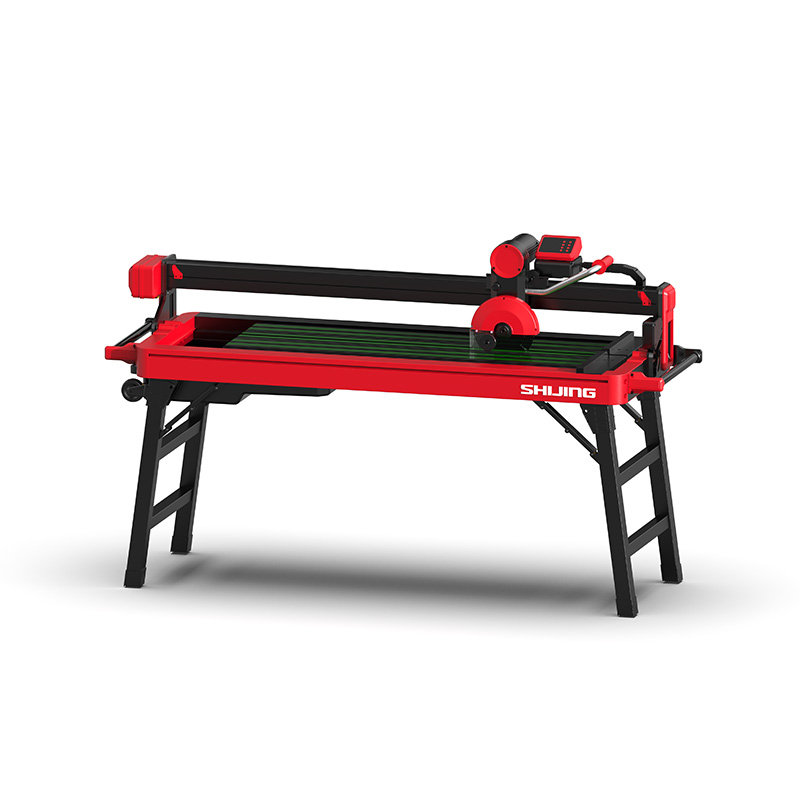
In a production setting, cutting a single tile and keeping a cutting process running for a long period are two different situations. A tile may pass through the cutting area without a visible issue, yet repeated cycles can gradually reveal changes in feeding, material handling, water flow, or operating rhythm. These changes do not always appear as an obvious fault. Sometimes they show up as a slight pause, a different material position, or a change in the way tiles move through the process.
Long cutting runs therefore depend on more than the cutting action itself. The way tiles are supplied, moved, processed, and cleared from the working area can influence how smoothly the operation continues. Material changes can also introduce new conditions that were not present at the beginning of a run.
Looking at the process as a connected sequence makes it easier to see where variation can develop. Feeding, loading, cutting speed, water flow, material buildup, repeated cycles, and material changes each occupy a different place in that sequence. When one part changes, another part may need attention as well.
How Does Continuous Tile Feeding Affect Long Cutting Runs
Continuous feeding creates a different working rhythm from handling tiles one at a time. Instead of treating every piece as a separate operation, the machine needs to receive material in a steady sequence. The transition from one tile to the next becomes part of the cutting process.
An Automatic Tile Cutting Machine can maintain a regular cutting pattern only when the material reaches the cutting area in a reasonably consistent manner. If tiles arrive with irregular spacing or pause during movement, the cutting cycle may also become less predictable. Small interruptions can become more noticeable when many pieces are processed one after another.
Tile dimensions can also affect feeding behavior. A long tile occupies the movement path differently from a shorter piece, while a wider tile may require more room during transfer. Changes in surface condition can also alter how easily a tile moves across a supporting surface.
The relationship can be viewed as a simple sequence:
- Material enters the feeding area.
- The tile moves toward the cutting position.
- The cutting operation begins after the material reaches the required position.
- The finished piece leaves the working area.
- The next tile enters the process.
When these transitions remain steady, continuous cutting is easier to manage. When one transition slows or changes, the effect can carry into the next cycle.
How Does Tile Loading Change During Extended Cutting Operations
Tile loading is closely connected to feeding, but the two stages do not have the same role. Feeding concerns how material moves through the process, while loading concerns how a continuing supply of tiles is placed into that process.
During a short run, the operator may have plenty of time to position the next tile. During an extended operation, repeated handling can become a source of variation. Tiles may be placed at slightly different angles, batches may be replenished, or the material being supplied may change gradually.
An Automatic Tile Cutting Machine does not remove the need for consistent material handling. Automated movement still depends on the condition of the tiles entering the system. If loading becomes irregular, the machine may receive material at a different rhythm even though its cutting sequence has not changed.
A practical loading routine generally pays attention to:
- Whether tiles are supplied without unnecessary interruptions
- Whether the material remains properly supported while being introduced
- Whether new batches have the same general dimensions as the material already being processed
- Whether handling becomes more difficult as the run continues
The point is not to make every loading action identical. It is to prevent avoidable changes from entering the production flow.
How Does Cutting Speed Affect Extended Tile Cutting Operations
Cutting speed becomes more noticeable during a long run because the process is repeated many times. A setting that appears suitable for a small number of pieces may behave differently when the same movement is repeated throughout an extended operation.
Speed affects the amount of time available for the cutting action and the movement of the material through the working area. If the pace changes, the relationship between feeding, cutting, and material removal changes with it.
The appropriate pace also depends on what is being processed. A thinner tile, a thicker tile, or a tile with a different surface may respond differently to the same cutting movement. This does not mean that slower movement is always preferable or that faster movement is always problematic. The important point is that cutting speed needs to remain compatible with the material and the surrounding process.
Operators can observe several signs when the cutting rhythm changes:
- The interval between pieces becomes less regular.
- Material movement appears less smooth.
- The cutting result begins to vary after a change in operating pace.
- The machine pauses more often between repeated actions.
For an Automatic Tile Cutting Machine, speed is therefore part of process coordination rather than an isolated setting. A change in one stage can affect the timing of the stages around it.
How Does Water Flow Change During Long Tile Cutting Runs
For wet cutting processes, water remains part of the working environment throughout the operation. Its condition can change as cutting continues, especially when the same water is circulated through the working area.
A steady flow helps keep the cutting zone supplied during operation. When the flow becomes uneven, the conditions around the cutting area can change. The difference may be subtle at first, but it can become easier to notice during a long run.
Water systems can also collect material residue as cutting continues. Fine particles and slurry may move through the system and settle in areas where water movement is weaker. If this accumulation changes the way water travels, the cutting area may no longer receive water in the same manner as it did at the beginning of the run.
| Water condition | Possible change during operation | What may be observed |
|---|---|---|
| Steady flow | Cutting area remains consistently supplied | Similar working conditions between cycles |
| Reduced flow | Less water reaches the cutting area | Changes in the working environment |
| Uneven flow | Water distribution varies during movement | Different conditions from one part of the cut to another |
| Residue buildup | Water movement becomes less consistent | Increasing need for cleaning or inspection |
The water system is therefore part of long-run process control. For an Automatic Tile Cutting Machine using wet cutting, checking water movement can be useful when the operating conditions no longer resemble those seen at the start of production.
How Does Material Accumulation Affect Extended Cutting Operations
Material accumulation is another change that can develop gradually. During cutting, small pieces of residue, slurry, and other material can collect around the working area. A single cycle may not create a noticeable difference, but repeated processing can change the condition of the surrounding surfaces.
The location of the buildup matters. Residue near a movement area can interfere with smooth material transfer, while accumulation around a supporting surface can alter how a tile rests. Material that enters the water system may also affect water circulation if it is allowed to remain there.
This is different from dust affecting machine motion. The focus here is the gradual change in the working environment caused by material generated during cutting.
A clean working area helps keep the physical conditions around the cutting process more consistent. It also makes it easier to identify a new problem because fresh residue is less likely to be confused with older buildup.
The relationship between continuous cutting and accumulation can be described as:
cutting activity → material residue → gradual buildup → changing working conditions
The longer the process continues, the more relevant this cycle becomes.
How Do Repeated Cutting Cycles Affect Long Run Performance
A long cutting run is made up of many individual cycles. Each cycle may appear simple, but the transition between cycles determines whether the overall process remains steady.
For example, one cycle may involve feeding a tile, moving it into position, cutting it, clearing the finished material, and preparing for the next piece. When these actions repeat without major interruption, the process forms a predictable rhythm.
However, small differences can appear between cycles. A tile may take slightly longer to enter the working area. A finished piece may remain near the cutting zone for longer than expected. A brief pause may occur before the next movement begins.
These changes do not necessarily indicate a serious machine problem. They can simply show that the conditions of a long production run are different from those of an individual cutting operation.
For an Automatic Tile Cutting Machine, cycle behavior can be considered through several connected questions:
- Does each tile enter the process in a similar manner?
- Does the cutting movement begin at a similar point in the cycle?
- Does finished material leave the working area without creating a delay?
- Does the next cycle begin without unnecessary interruption?
Looking at these transitions can provide a clearer picture of long-run behavior than examining a single finished tile by itself.
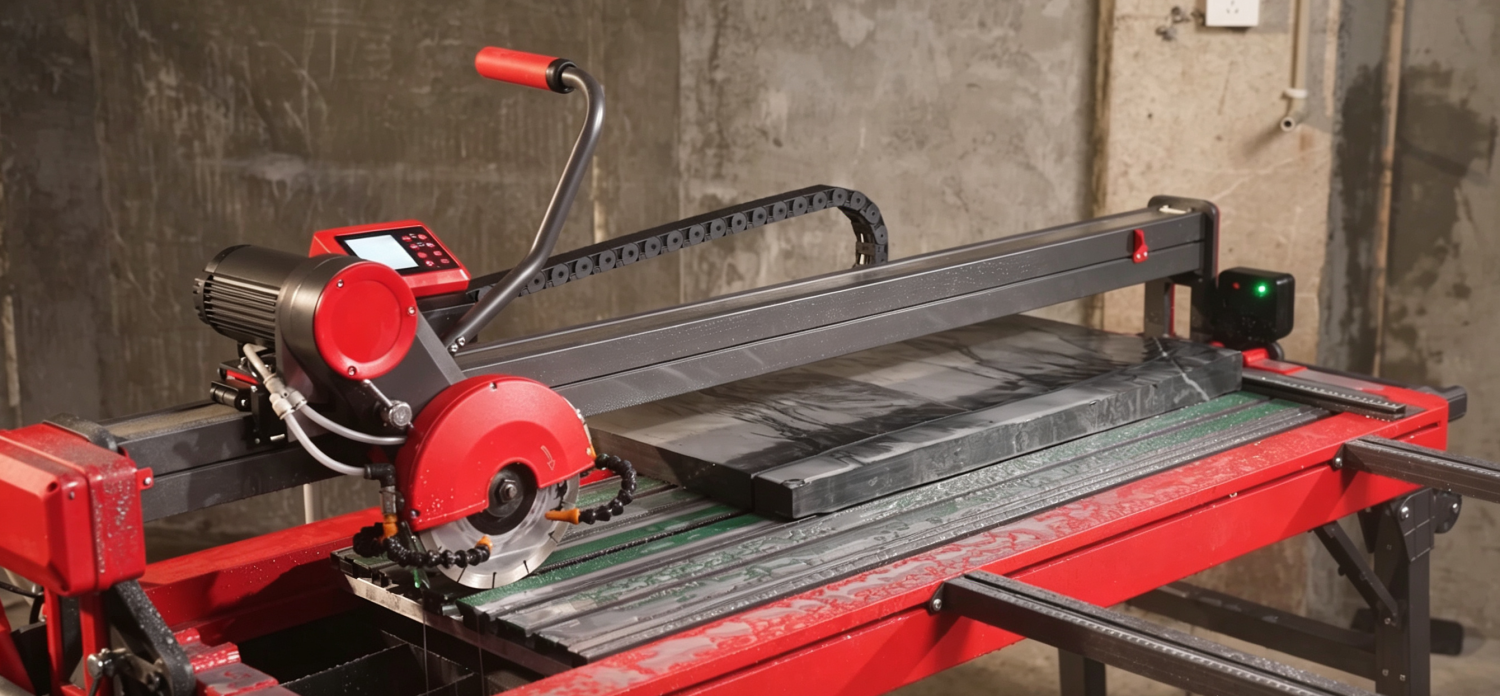
What Changes When Tile Types or Sizes Are Switched During Long Runs
Changing materials during a continuous operation introduces a new condition into an established process. The machine may continue using the same general sequence, but the material entering the process is no longer identical.
A change in tile size can affect loading, feeding, support, and material movement. A change in thickness can alter the way the tile responds during cutting. Surface texture can also change how the material moves through the working area.
For this reason, a material change should be treated as a process transition rather than simply replacing one tile with another.
| Change during production | Area that may be affected | Point to observe |
|---|---|---|
| Tile length changes | Feeding and support | How the material moves through the working area |
| Tile width changes | Loading and movement | Available space during transfer |
| Tile thickness changes | Cutting process | How the material responds during cutting |
| Surface changes | Feeding and handling | Contact with supporting surfaces |
The transition becomes easier to manage when the new material is considered before it enters a long sequence of repeated cuts. Checking the way it loads, moves, and exits can reveal whether the existing process remains suitable.
This also helps explain why a machine can appear stable during one production run and behave differently after the material is changed. The equipment has not necessarily changed; the conditions around the process have.
What Should Be Checked When an Automatic Tile Cutting Machine Slows During Long Runs
A slowdown during an extended cutting run does not always point to one specific cause. Because several stages operate in sequence, a change in one area can appear as a delay somewhere else.
The feeding process is a useful place to observe. If tiles are not entering the working area at a regular pace, the cutting cycle may appear slower even when the cutting movement itself has not changed.
Material loading is another point to check. An interrupted supply can create pauses between cycles. If the tile size or thickness has recently changed, the transition itself may also explain a change in operating rhythm.
Water flow and material accumulation deserve attention when wet cutting is involved. A change in water movement or increasing residue can alter the conditions around the cutting area. Repeated cycles should also be observed to determine whether the slowdown occurs once or continues from one cycle to the next.
A simple sequence for checking the process can follow the direction of material movement:
- Check how tiles are being supplied.
- Observe whether feeding remains regular.
- Compare the current cutting rhythm with earlier cycles.
- Check water movement when wet cutting is used.
- Look for material accumulation around the working area.
- Consider whether a different tile size, thickness, or surface has recently entered production.
Long cutting runs are therefore less about one isolated machine action and more about keeping the connected stages of material handling and cutting from drifting apart. When feeding, loading, cutting, water flow, working-area conditions, and repeated cycles are considered together, changes in the process become easier to trace and address.
.jpg "7859F 12 (3D) Lines Laser")
.jpg "1220 Level Ruler")